WE Publisher

Imagine if someone told you there was a trick so simple that you could do it in your head—and it could help you estimate when your investments would double. No spreadsheets. No formulas. Just one quick calculation. That’s exactly what the Rule of 72 offers.
Many people start saving or investing without a clear idea of how long it will take for their money to grow. Understanding the Rule of 72 can provide a clearer picture and build confidence in financial planning. By the end of this guide, you’ll know how to use this rule, where it works best, and how to apply it in your own plans—without feeling like you need an advanced math degree.
Introduction
What Is the Rule of 72?
The Rule of 72 is a mental math shortcut that estimates how long it will take for your investment to double, based on a fixed annual interest rate. All you have to do is divide 72 by the interest rate.
For example, if your investment earns 6% annually, 72 ÷ 6 = 12 years to double.
Why is this such a helpful concept? Because it simplifies one of the most important principles in finance: compound growth. It gives you an immediate sense of how long your money needs to sit and earn interest to multiply. This idea can shape how you view risk, returns, and your time horizon.
By understanding this one number—72—you gain insight into how your savings or investments could behave over time. It’s not a magic number, but it’s incredibly useful.
Background
The Origins and Basics of the Rule
The Rule of 72 didn’t appear overnight. It’s been referenced in financial writing for centuries. The earliest use of a similar concept can be traced back to mathematicians during the Renaissance, who were fascinated with compounding numbers and natural growth patterns.
Why 72, though? It’s not random. The number 72 has a lot of factors (2, 3, 4, 6, 8, 9, and 12), which makes mental calculations easier across a range of interest rates. Financial experts found that it provided a reasonable estimate for annual interest rates between 6% and 10%. Outside that range, it becomes a little less precise—but it still gives a ballpark figure that’s good enough for planning.
In financial education today, the Rule of 72 is one of the first tools taught to illustrate compounding. It’s a gateway to understanding how time and returns work together.
Key terms to know:
- Compound interest: Interest calculated on both the initial principal and on accumulated interest.
- Rate of return: The annual percentage gain on an investment.
- Doubling time: How long it takes for your investment to grow twofold.
These concepts all tie together when using this rule.
Check out the Rule of 72 Calculator here
Detailed Overview
How the Rule of 72 Actually Works
Here’s the basic formula:
72 ÷ Annual Interest Rate = Years to Double
Let’s look at some examples:
- At 4%, it takes 72 ÷ 4 = 18 years to double.
- At 8%, it takes 72 ÷ 8 = 9 years.
- At 12%, it takes just 6 years.
Now flip it around: You can also use it to find the required interest rate if you have a doubling goal.
72 ÷ Years to Double = Required Rate
So, if you want your money to double in 6 years, 72 ÷ 6 = 12%. You’ll need to earn that average return annually.
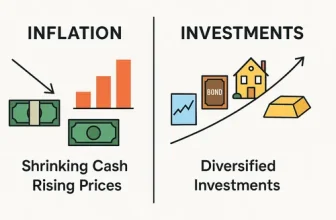
Where does this help? It’s great for comparing investment options or visualizing the effect of inflation. Say inflation is at 3%. In that case, your purchasing power halves in 24 years. That alone should make someone consider how inflation eats away at savings sitting in a checking account.
This rule gives clarity without complexity. It’s quick. It’s functional. And it makes a huge difference in thinking long-term.
Current Relevance
Why the Rule Still Matters Today
Despite new apps, AI, and endless financial calculators, this simple formula remains useful. In a time when people crave faster answers and clearer financial planning, being able to quickly estimate compounding is more valuable than ever.
With low interest rates dominating for more than a decade, many savers didn’t see their money double very quickly. But interest rates are changing. So is the way people save and invest. Tools like the Rule of 72 are relevant again as interest-bearing accounts become more attractive.
Some recent shifts making this rule even more relevant:
- Higher savings yields: Banks now offer over 4% on some high-yield savings accounts.
- Greater access to investing: Apps make it easy to invest in index funds or bonds with real returns.
- Rising inflation awareness: People now consider both growth and loss of value when thinking about the future.
The Rule of 72 also helps in discussions about retirement and debt. Consider how long your 401(k) could grow—or how fast credit card debt could double if left unpaid. This single number frames both optimism and caution.
Practical Applications and Strategies
Real-World Examples
Let’s walk through a few realistic scenarios:
Example 1: Retirement Planning
You’re 30 years old with $10,000 in a Roth IRA earning 8% annually. Using the Rule of 72:
72 ÷ 8 = 9 years
Your money doubles every 9 years:
- Age 39: $20,000
- Age 48: $40,000
- Age 57: $80,000
- Age 66: $160,000
Without adding another cent, your money multiplies. That’s the strength of compound growth—and why starting early helps.
Example 2: Inflation’s Effect
Let’s say inflation averages 3%. At that rate:
72 ÷ 3 = 24 years
That means $100 today will have the buying power of $50 in 24 years. Even low inflation has a long-term impact.
Example 3: Paying Down Credit Card Debt
If a credit card carries a 24% interest rate:
72 ÷ 24 = 3 years
Debt doubles every 3 years if unpaid. That’s a stark reminder to avoid carrying high balances.
Tips for making the most of this tool:
- Use it to compare options quickly.
- Don’t use it alone—check the actual math for big decisions.
- Apply it to both savings and debt.
Common Mistakes and Pitfalls
Avoiding Missteps and Misunderstandings
The Rule of 72 is simple—but like any shortcut, it can be used the wrong way. Here are some common mistakes people make:
Mistake 1: Using it for variable returns
If your investment returns change every year, the rule becomes less accurate. It assumes a fixed rate, which is rarely the case in stock markets.
Mistake 2: Forgetting taxes and fees
Returns that are taxed or include fees reduce the actual compounding rate. Always adjust your estimates based on your real returns after deductions.
Mistake 3: Ignoring inflation
If you only think about nominal growth and not purchasing power, you might overestimate how much your money can do in the future.
Mistake 4: Applying it to extremely high or low rates
The closer you get to 1% or over 20%, the less accurate the rule becomes. At extremes, you need to use more precise formulas.
How to avoid these issues?
- Think of the Rule of 72 as a starting point, not the final word.
- Pair it with actual financial planning tools for detailed projections.
- Use it regularly to stay motivated and focused on long-term goals.
Conclusion
Wrapping It All Up
The Rule of 72 offers a clear and fast way to think about growth. Whether you’re saving for retirement, evaluating investment choices, or worried about inflation, this one formula gives immediate insight.
It’s not complicated. It’s not buried in jargon. It doesn’t take a calculator. And that’s exactly why it works.
Money grows over time. Or it shrinks. This rule helps you see both possibilities. It’s the kind of knowledge that sticks with you—and can lead to smarter choices in your personal finances or business strategy.
If you haven’t used the Rule of 72 before, try it out. Grab a rate, divide it into 72, and see what that means for your future. It may shift how you think about time, returns, and opportunity. And it may just be one of the easiest steps you take toward financial clarity.