Introduction
Why Investing Matters
Have you ever wondered why some people grow their wealth exponentially while others struggle financially despite earning a steady income? The answer lies in investing. Investing isn’t just about making money—it’s about making your money work for you. Whether you’re planning for retirement, aiming for financial independence, or just trying to beat inflation, understanding various investment types is crucial.
What Is Investing?
Investing is the process of putting your money into assets with the expectation of generating future returns. Unlike saving, where money sits idle in a bank account earning minimal interest, investing allows your money to grow over time through capital appreciation, dividends, or interest payments.
Why Should You Invest?
Investing provides multiple benefits, including the ability to:
- Grow wealth through compounding returns: Earnings from investments can be reinvested to generate even greater returns over time.
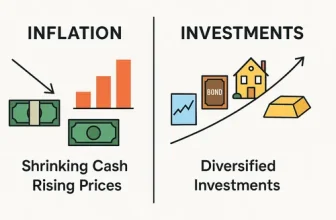
- Beat inflation and protect purchasing power: Inflation erodes the value of cash savings, while investments typically outpace inflation, ensuring your money maintains its value.
- Create additional income streams for financial security: Investments such as dividend stocks, bonds, and rental properties generate passive income that can supplement your primary earnings.
- Diversify financial assets to reduce risk: A well-balanced investment portfolio spreads risk across various asset classes, protecting against market fluctuations.
The Power of Compound Interest
One of the most important principles in investing is compound interest, often referred to as the “eighth wonder of the world.” Compounding occurs when your investments generate returns, and those returns are reinvested to earn even more returns. Over time, this effect leads to exponential growth in wealth.
For example, if you invest $10,000 at an annual return of 8%, in 30 years, your investment will grow to $100,626, assuming all returns are reinvested. This is why starting early is crucial—the longer your money compounds, the greater your potential wealth.
Investing vs. Saving: Key Differences
| Feature | Investing | Saving |
|---|---|---|
| Objective | Grow wealth | Preserve wealth |
| Returns | Higher, but variable | Lower, but stable |
| Risk Level | Moderate to high | Low to none |
| Time Horizon | Long-term | Short-term |
| Examples | Stocks, bonds, real estate | Savings account, CDs, emergency fund |
How Much Should You Invest?
The amount you should invest depends on your financial goals, risk tolerance, and income. A common rule of thumb is the 50/30/20 rule:
- 50% of income for necessities (housing, food, utilities).
- 30% for discretionary spending (entertainment, travel, shopping).
- 20% for savings and investments (retirement funds, stocks, real estate).
However, if you want to build wealth faster, you can increase your investment percentage by cutting unnecessary expenses.
Investment Mindset: Long-Term Thinking
Successful investors understand that investing is not about getting rich quickly but about long-term financial growth. Market fluctuations will occur, but historically, markets tend to rise over time. Patience and discipline are key.
Common Fears About Investing (And Why You Shouldn’t Worry)
- “I don’t have enough money to invest.” Many platforms allow investing with as little as $10. Fractional shares and ETFs make diversification accessible even for small investors.
- “I’m afraid of losing money.” While market downturns happen, long-term investors who stay the course generally see positive returns.
- “I don’t understand how investing works.” With the rise of robo-advisors and educational resources, learning about investing has never been easier.
What You Will Learn in This Guide
This guide provides an in-depth look at the different types of investments, how they work, and how you can start implementing smart strategies to grow your wealth. By understanding the risk-return trade-off and selecting the right assets, you can build a well-balanced portfolio that aligns with your financial goals.
Now, let’s explore the fundamental investment principles you need to know before diving into specific investment types.
Background
Investment Fundamentals
Before diving into specific types of investments, let’s cover some fundamental concepts that shape investment decisions:
Key Investment Concepts
- Risk vs. Reward: Investments with higher potential returns generally come with higher risks. It’s important to evaluate your risk appetite and choose investments accordingly. Low-risk investments like government bonds offer stability, while high-risk investments like cryptocurrencies can yield significant gains but also substantial losses.
- Diversification: Spreading your investments across different asset classes reduces overall risk and enhances stability in volatile markets. A well-diversified portfolio contains a mix of stocks, bonds, real estate, and alternative assets to buffer against market downturns.
- Liquidity: How quickly and easily an investment can be converted to cash without significant loss. Stocks and bonds are highly liquid, whereas real estate or private equity can take longer to sell.
- Compounding: Reinvesting earnings to generate exponential growth over time. The earlier you start, the more you benefit from compounding interest, allowing even small initial investments to grow significantly over decades.
- Inflation Hedge: Some investments, such as real estate, commodities, and inflation-protected securities, act as hedges against inflation, preserving your purchasing power over time.
Understanding Your Risk Tolerance
Every investor has a different appetite for risk. Knowing your risk tolerance helps determine the best investments for you:
- Conservative Investors: Prioritize safety and steady returns. They prefer fixed-income assets such as bonds, certificates of deposit (CDs), and dividend-paying stocks.
- Moderate Investors: Balance risk and reward. They diversify across mutual funds, index funds, and exchange-traded funds (ETFs) that track broader markets.
- Aggressive Investors: Seek high-risk, high-reward opportunities. They may invest in growth stocks, venture capital, cryptocurrency, and speculative assets.
The Importance of Time Horizon
Your investment time horizon—how long you plan to hold an investment—affects your risk tolerance and asset allocation.
- Short-Term (0-3 years): Low-risk investments such as high-yield savings accounts, money market funds, and short-term bonds.
- Medium-Term (3-10 years): A mix of stocks, bonds, and real estate for balanced growth.
- Long-Term (10+ years): Greater allocation to equities and alternative investments for higher potential returns.
The Role of Asset Allocation
Asset allocation refers to how an investor distributes investments among different asset categories. A well-planned asset allocation strategy ensures diversification and risk management.
- Conservative Portfolio: 70% bonds, 20% stocks, 10% cash.
- Balanced Portfolio: 50% stocks, 40% bonds, 10% alternative investments.
- Aggressive Portfolio: 80% stocks, 10% bonds, 10% alternative investments.
By understanding these investment fundamentals, you can make more informed decisions and tailor your portfolio to align with your financial goals. Now, let’s explore the various investment options available to you
Detailed Overview
A Deep Dive into Investment Options
Understanding different investment types allows you to make informed decisions based on your goals, risk tolerance, and time horizon. Let’s explore the most common investment categories in greater detail:
1. Stocks (Equities)
Investing in stocks means buying shares in a company, giving you partial ownership and the potential to benefit from its growth.
- Potential Returns: Historically, stocks offer an average annual return of 7-10% over the long term.
- Risks: Market fluctuations, company performance issues, economic downturns.
- Types of Stocks:
- Growth Stocks: Companies that reinvest profits for expansion (e.g., Tesla, Amazon).
- Value Stocks: Undervalued stocks with stable earnings (e.g., Coca-Cola, Procter & Gamble).
- Dividend Stocks: Companies that distribute a portion of profits to shareholders (e.g., Johnson & Johnson, AT&T).
- Best for: Long-term investors looking for capital appreciation or passive income.
- How to Invest: Open a brokerage account and start with index funds, ETFs, or blue-chip stocks.
2. Bonds (Fixed-Income Investments)
Bonds are loans to governments or corporations that pay periodic interest over a fixed term.
- Potential Returns: 2-6% annually, depending on the bond type and credit rating.
- Risks: Inflation, interest rate changes, issuer default.
- Types of Bonds:
- Government Bonds: Issued by national governments, often low-risk (e.g., U.S. Treasury bonds).
- Municipal Bonds: Issued by state and local governments, often tax-advantaged.
- Corporate Bonds: Issued by businesses, higher risk but higher yields.
- High-Yield (Junk) Bonds: Riskier bonds with high interest rates.
- Best for: Conservative investors seeking stability and income.
- How to Invest: Buy directly through government agencies, ETFs, or mutual funds.
3. Real Estate Investments
Real estate provides both rental income and long-term capital appreciation.
- Potential Returns: 6-12% annually, varying by location and market conditions.
- Risks: High initial capital, market downturns, maintenance costs.
- Types of Real Estate Investments:
- Residential Properties: Rental homes, apartments.
- Commercial Properties: Office buildings, shopping centers.
- REITs (Real Estate Investment Trusts): Allow investors to buy shares in property portfolios.
- Crowdfunded Real Estate: Platforms that pool investments for property purchases.
- Best for: Investors seeking passive income and portfolio diversification.
- How to Invest: Buy physical property or invest through REITs and real estate funds.
4. Mutual Funds & ETFs (Exchange-Traded Funds)
These pooled investments offer instant diversification by holding multiple assets.
- Potential Returns: 5-12% annually, depending on market conditions and fund type.
- Risks: Management fees, market volatility.
- Types of Funds:
- Index Funds: Track major stock indexes (e.g., S&P 500, NASDAQ 100).
- Actively Managed Funds: Managed by professionals, aiming to outperform the market.
- Sector-Specific Funds: Focus on industries like technology, healthcare, or energy.
- Best for: Beginners and passive investors seeking diversification.
- How to Invest: Buy through brokerage accounts or retirement accounts like IRAs and 401(k)s.
5. Cryptocurrency Investments
Cryptocurrencies like Bitcoin and Ethereum are digital assets built on blockchain technology.
- Potential Returns: Highly volatile, capable of extreme gains and losses.
- Risks: Regulatory uncertainty, hacking threats, extreme price fluctuations.
- Popular Cryptocurrencies:
- Bitcoin (BTC): The first and largest cryptocurrency by market cap.
- Ethereum (ETH): Known for smart contracts and decentralized applications.
- Altcoins: Other digital assets like Solana, Cardano, and Binance Coin.
- Best for: Risk-tolerant investors interested in emerging financial technologies.
- How to Invest: Use cryptocurrency exchanges like Coinbase, Binance, or decentralized finance (DeFi) platforms.
6. Alternative Investments
Alternative investments provide unique opportunities beyond traditional stocks and bonds.
- Types of Alternative Investments:
- Commodities: Precious metals (gold, silver), oil, agricultural goods.
- Hedge Funds: Private funds that employ complex strategies for high returns.
- Private Equity: Direct investment in startups and private companies.
- Art & Collectibles: Rare paintings, vintage cars, rare coins.
- Potential Returns: Varies widely based on asset class.
- Risks: Low liquidity, high expertise required.
- Best for: Experienced investors diversifying portfolios.
- How to Invest: Work with fund managers, investment platforms, or specialty markets.
7. Retirement Accounts & Tax-Advantaged Investments
Retirement accounts provide tax benefits to encourage long-term investing.
- Common Types:
- 401(k): Employer-sponsored plan with pre-tax contributions.
- IRA (Traditional & Roth): Tax-advantaged accounts for individuals.
- HSA (Health Savings Account): Provides tax benefits for medical expenses.
- 529 Plan: Education savings plan with tax benefits.
- Best for: Individuals planning for retirement and long-term financial security.
- How to Invest: Open accounts through employers or financial institutions.
By understanding these investment options, you can build a diverse portfolio that aligns with your financial goals and risk tolerance. Next, let’s explore current investment trends and their real-world impact.
Current Relevance
Trends & Real-World Impact
Investing is not a static practice; it evolves with technological advancements, economic shifts, and changing consumer behaviors. Understanding the trends and real-world impact of investments today helps investors make informed decisions. Here’s why investing matters more than ever in the modern era:
Key Trends Shaping Investments Today
1. The Rise of AI and Robo-Advisors
- Automated investing platforms, or robo-advisors, use artificial intelligence to manage investment portfolios efficiently and at a lower cost than traditional financial advisors.
- Popular platforms like Betterment and Wealthfront analyze risk tolerance and create diversified portfolios for investors with minimal fees.
- Impact: Lower barriers to entry, making investing more accessible to beginners and small investors.
2. Sustainable and ESG Investing
- Investors are increasingly prioritizing Environmental, Social, and Governance (ESG) factors when choosing investments.
- Companies that focus on sustainability, ethical governance, and social responsibility are attracting more capital.
- Impact: Higher demand for green bonds, renewable energy stocks, and socially responsible ETFs.
3. The Growing Popularity of Cryptocurrency and Blockchain
- Cryptocurrencies such as Bitcoin and Ethereum are gaining wider adoption, with more financial institutions integrating blockchain technology.
- Decentralized finance (DeFi) platforms are disrupting traditional banking systems by offering lending, borrowing, and trading services without intermediaries.
- Impact: Increased opportunities for investors but with high volatility and regulatory risks.
4. Fractional Investing & Increased Accessibility
- Platforms now allow investors to buy fractional shares of expensive assets, such as stocks and real estate.
- Companies like Robinhood, M1 Finance, and Fundrise enable users to invest in high-value assets with as little as $1.
- Impact: Democratization of investing, making it possible for individuals with smaller budgets to build diverse portfolios.
5. Real Estate Trends: Crowdfunding & REITs
- Real estate investing is shifting towards online crowdfunding platforms, allowing investors to pool resources and invest in high-value properties.
- Real Estate Investment Trusts (REITs) continue to provide a way for investors to gain exposure to the real estate market without property management responsibilities.
- Impact: More liquidity and accessibility in real estate investments, reducing the barriers of property ownership.
6. Tech-Driven Investment Strategies
- Big data and machine learning are improving investment decision-making by analyzing market trends and predicting future performance.
- High-frequency trading (HFT) and algorithmic trading have transformed how stocks are bought and sold.
- Impact: Increased market efficiency but also potential for market manipulation and rapid fluctuations.
Real-World Impact of These Trends
1. Financial Inclusion and Accessibility
- New investment platforms and low-cost robo-advisors have made it easier for individuals to enter the market, even with limited capital.
- Mobile trading apps allow investors to manage their portfolios from anywhere, eliminating the need for expensive financial advisors.
2. Economic Growth and Job Creation
- Increased investment in technology, renewable energy, and healthcare is driving economic expansion and creating job opportunities.
- Startups and small businesses benefit from venture capital and private equity investments, fostering innovation and market competition.
3. Changing Investor Behavior
- Younger generations, particularly Millennials and Gen Z, prefer impact investing—aligning their investments with social and environmental causes.
- Passive investing strategies, such as index fund investing, are overtaking traditional active stock-picking strategies due to lower costs and higher historical performance.
4. Market Volatility and Regulatory Changes
- The increasing role of technology in investing introduces market risks, including flash crashes and algorithm-driven volatility.
- Governments are implementing stricter regulations on cryptocurrency and digital assets to prevent fraud and financial instability.
How These Trends Affect Your Investment Strategy
- Diversify Your Portfolio: Invest in a mix of traditional and emerging assets to balance risk and reward.
- Consider ESG Investments: Research companies with strong sustainability practices to align profits with ethical impact.
- Leverage Technology: Utilize robo-advisors, AI-driven insights, and data analytics to make informed decisions.
- Stay Informed on Regulations: Keep track of changing laws in the cryptocurrency and digital asset space to mitigate risks.
By staying ahead of these investment trends, investors can position themselves for financial growth while minimizing risks. Next, we will explore practical applications of these strategies and real-world investment success stories.
Practical Applications and Strategies
Real-Life Examples
Investing is not just about theoretical knowledge—it’s about applying the right strategies in real life to achieve financial success. Whether you are looking to grow wealth, generate passive income, or secure your retirement, there are actionable steps you can take today.
How to Apply These Investments in Your Life
1. Building a Diversified Investment Portfolio
A well-diversified portfolio helps reduce risk and optimize returns. Consider these allocations:
- Stocks (50%): Invest in a mix of individual stocks, ETFs, and index funds.
- Bonds (20%): Include corporate and government bonds to provide stability.
- Real Estate (15%): Invest in REITs or rental properties to generate passive income.
- Alternative Investments (10%): Explore commodities, private equity, or cryptocurrency.
- Cash & Cash Equivalents (5%): Maintain liquidity with savings and money market funds.
2. Generating Passive Income Streams
- Dividend Stocks: Invest in companies with a track record of paying dividends, such as Coca-Cola, Johnson & Johnson, or Procter & Gamble.
- Real Estate Rentals: Own rental properties that generate consistent monthly income.
- Bonds & Fixed Income Securities: Use high-yield bonds to earn stable interest payments.
- REITs & Crowdfunded Real Estate: Invest in real estate without direct property ownership.
- Peer-to-Peer Lending: Provide loans through platforms like Prosper or LendingClub for steady returns.
3. Retirement Planning and Tax-Advantaged Accounts
- 401(k) & IRA Contributions: Maximize contributions to employer-sponsored retirement plans and IRAs for tax benefits.
- Roth IRA for Tax-Free Growth: Consider a Roth IRA for tax-free withdrawals in retirement.
- HSA (Health Savings Account): Utilize HSAs for tax-free medical expenses and investment growth.
- Annuities for Guaranteed Income: Secure lifelong income through annuities, especially for risk-averse investors.
4. Timing & Market Strategies for Maximum Returns
- Dollar-Cost Averaging (DCA): Invest a fixed amount regularly to mitigate market volatility.
- Growth vs. Value Investing: Choose growth stocks for long-term potential or value stocks for undervalued opportunities.
- Momentum Investing: Invest in trending stocks with increasing momentum and volume.
- Contrarian Investing: Buy when others are fearful and sell when others are greedy.
5. Leveraging Technology for Smarter Investing
- Robo-Advisors: Use platforms like Wealthfront or Betterment for automated investment management.
- Stock & Crypto Trading Apps: Trade assets with apps like Robinhood, Webull, or Binance.
- AI-Based Market Analysis: Utilize AI-driven tools to assess market trends and make informed investment decisions.
- Financial Planning Software: Use budgeting apps like Mint or Personal Capital to track investments.
Case Studies & Success Stories
1. Warren Buffett – The Long-Term Investor
- Buffett built his fortune through value investing and long-term stock holdings.
- He focuses on financially sound companies with strong competitive advantages.
- Key Takeaway: Patience and fundamental analysis lead to financial success.
2. Real Estate Mogul – Rental Property Income
- A real estate investor started with one rental property and expanded to 10 over a decade.
- Now earns over $100,000 per year in passive rental income.
- Key Takeaway: Real estate investing can create long-term wealth through appreciation and rental income.
3. Millennial Investor – FIRE (Financial Independence, Retire Early)
- A millennial investor saved aggressively and invested in index funds and ETFs.
- Achieved financial independence at 35 with a portfolio of over $1 million.
- Key Takeaway: Consistent investing and frugal living can accelerate financial freedom.
4. Cryptocurrency Early Adopter – Bitcoin Wealth
- An early adopter bought Bitcoin in 2013 and held onto it despite volatility.
- Investment grew over 10,000% in value, allowing for financial independence.
- Key Takeaway: High-risk investments can yield high rewards but require long-term conviction.
Actionable Steps to Take Today
- Start with a Plan: Define clear financial goals and determine your risk tolerance.
- Open an Investment Account: Use a brokerage, robo-advisor, or retirement account to begin investing.
- Allocate Assets Wisely: Diversify your investments across stocks, bonds, real estate, and alternatives.
- Automate Investments: Set up recurring contributions to take advantage of compound growth.
- Stay Educated: Follow market news, read investment books, and keep learning about emerging trends.
- Monitor & Adjust: Regularly review your portfolio and rebalance as needed.
By implementing these investment strategies, you can build long-term wealth, generate passive income, and secure financial freedom. Next, let’s explore common mistakes investors make and how to avoid them.
Common Mistakes and Pitfalls
Common Mistakes & How to Avoid Them
Even seasoned investors can make mistakes that undermine their financial growth. Being aware of common pitfalls and knowing how to avoid them can help you make better investment decisions.
1. Emotional Investing
- Many investors make decisions based on fear or greed rather than data and long-term strategy.
- Common mistake: Selling during a market downturn out of panic.
- How to avoid it: Develop a well-researched investment plan and stick to it, regardless of market fluctuations.
2. Lack of Diversification
- Concentrating investments in a single asset class increases risk exposure.
- Common mistake: Putting all money into one stock or sector.
- How to avoid it: Diversify across different asset classes like stocks, bonds, real estate, and alternative investments.
3. Ignoring Fees & Expenses
- Investment fees can eat into profits over time.
- Common mistake: Paying high mutual fund or advisory fees without evaluating alternatives.
- How to avoid it: Choose low-cost index funds and ETFs, and compare expense ratios before investing.
4. Trying to Time the Market
- Many investors attempt to buy at market lows and sell at highs but often fail.
- Common mistake: Waiting for the “perfect” moment to invest, leading to missed opportunities.
- How to avoid it: Use Dollar-Cost Averaging (DCA) by investing consistently over time, reducing the impact of market fluctuations.
5. Neglecting Research & Due Diligence
- Investing without understanding an asset’s fundamentals can lead to losses.
- Common mistake: Investing based on hype, media trends, or recommendations from unverified sources.
- How to avoid it: Conduct thorough research before investing, read financial reports, and analyze historical performance.
6. Not Rebalancing Your Portfolio
- Over time, certain assets in a portfolio may outperform others, altering the intended asset allocation.
- Common mistake: Letting a portfolio become too heavily weighted in one asset class.
- How to avoid it: Rebalance periodically to maintain your desired risk level and diversification.
7. Underestimating Inflation’s Impact
- Inflation erodes the purchasing power of money over time.
- Common mistake: Keeping too much cash in savings rather than investing in inflation-resistant assets.
- How to avoid it: Invest in equities, real estate, or inflation-protected securities (TIPS) to hedge against inflation.
8. Failing to Plan for Taxes
- Capital gains taxes can significantly impact net returns.
- Common mistake: Selling investments without considering tax implications.
- How to avoid it: Utilize tax-advantaged accounts like 401(k)s, IRAs, and HSAs, and consider tax-efficient strategies like tax-loss harvesting.
9. Ignoring Retirement Planning
- Many investors delay saving for retirement, thinking they have plenty of time.
- Common mistake: Not contributing enough to retirement accounts early on.
- How to avoid it: Start investing in retirement accounts as early as possible to take advantage of compound growth.
10. Overconfidence in Investing
- Some investors believe they can consistently outperform the market.
- Common mistake: Trading excessively or taking on too much risk without a solid strategy.
- How to avoid it: Stick to a disciplined investment strategy, avoid speculative trading, and consult financial advisors when necessary.
Do’s and Don’ts for Smart Investing
✅ Do:
- Educate yourself on different investment options.
- Maintain a diversified portfolio.
- Invest for the long term and avoid emotional decision-making.
- Rebalance your portfolio periodically.
- Take advantage of tax-efficient investment strategies.
❌ Don’t:
- Panic sell during market downturns.
- Put all your money into a single asset.
- Ignore investment fees and expenses.
- Fall for get-rich-quick schemes.
- Delay retirement planning.
By recognizing these common mistakes and implementing preventative strategies, you can optimize your investment journey and build long-term financial security. Next, let’s summarize the key takeaways and outline your next steps.
Conclusion
Key Takeaways & Next Steps
Investing is a powerful tool for building wealth and securing financial independence. Understanding the various investment options, managing risks, and developing a disciplined strategy can help you achieve your long-term financial goals. Below are the key takeaways from this guide and actionable steps to move forward.
Key Takeaways:
- Investing is Essential for Wealth Building: Simply saving money is not enough due to inflation. Investing allows your money to grow over time through various assets such as stocks, bonds, real estate, and alternative investments.
- Risk and Reward Go Hand in Hand: Higher potential returns usually come with higher risks. Understanding your risk tolerance helps in selecting suitable investments.
- Diversification is Crucial: A well-diversified portfolio spreads risk across multiple asset classes, reducing the impact of market downturns.
- Long-Term Perspective Yields Better Results: Market volatility is normal, but historically, long-term investors see better returns than short-term traders.
- Compounding is the Secret to Wealth Growth: The earlier you start investing, the more time your money has to compound and grow exponentially.
- Avoid Common Mistakes: Emotional investing, lack of diversification, ignoring fees, and failing to plan for taxes can reduce investment gains.
- Leverage Technology for Smart Investing: Utilize robo-advisors, automated investing platforms, and research tools to make data-driven decisions.
- Stay Educated and Updated: Investment trends, economic conditions, and new financial products evolve over time. Continuous learning helps in making informed decisions.
Next Steps to Start Investing Today:
- Define Your Financial Goals: Determine short-term, medium-term, and long-term financial objectives (e.g., retirement, home purchase, wealth accumulation).
- Assess Your Risk Tolerance: Identify whether you are a conservative, moderate, or aggressive investor and allocate assets accordingly.
- Choose an Investment Strategy: Decide whether you want to invest in individual stocks, ETFs, real estate, or passive index funds.
- Open an Investment Account: Use a brokerage account, robo-advisor, or employer-sponsored retirement plan (e.g., 401(k), IRA) to start investing.
- Start Small and Be Consistent: Regularly invest a fixed amount through dollar-cost averaging to minimize the impact of market fluctuations.
- Monitor and Rebalance Your Portfolio: Periodically review your asset allocation and adjust based on changing financial goals and market conditions.
- Plan for Taxes and Fees: Use tax-advantaged accounts and be mindful of fees to maximize net returns.
- Seek Professional Advice if Needed: Consult financial advisors for personalized investment strategies and risk management.
Final Thoughts
Investing is a long-term journey that requires patience, discipline, and continuous learning. Whether you’re a beginner or an experienced investor, following sound investment principles and avoiding common pitfalls can set you on the path to financial success.
The key is to start today—no matter how small. The sooner you begin, the more time your investments have to grow and compound. What step will you take today to secure your financial future?
Let’s continue the conversation—share your investment journey, ask questions, or explore further resources to enhance your financial knowledge!