WE Publisher
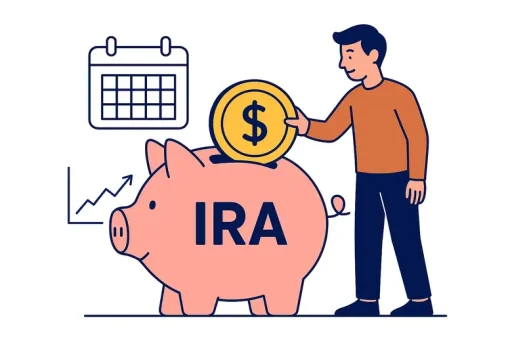
How Much Will You Really Have in Retirement If You Start Saving Late?
That question keeps many people up at night. It’s a fair concern, especially for those who didn’t begin investing in their 20s. The truth is, even if you start later, there are tools that can help you catch up—and one of the most powerful among them is the Individual Retirement Account, or IRA.
Let’s walk through what IRAs are, why they matter, and how you can make the most of them, even if you’re just getting started.
Introduction
Building a Future with Individual Retirement Accounts (IRAs)
Individual Retirement Accounts (IRAs) are one of the most accessible retirement savings options available. They’re especially valuable for people who don’t have a workplace plan like a 401(k) or want to supplement one. In this guide, we’ll break down what IRAs are, how they work, and how they might fit into your long-term financial plans.
By the end of this article, you’ll know the types of IRAs, how contributions and withdrawals work, how taxes are involved, and how to use an IRA to your advantage. Whether you’re in your early career or closing in on retirement, IRAs can play a key role in helping you save smarter.
Background
What You Need to Know Before You Open an IRA
The IRA has been around since the 1970s. It was created as a way for people to save for retirement with some helpful tax advantages. Back then, only a small percentage of workers had access to employer-sponsored retirement plans, so Congress passed legislation to make retirement saving more flexible.
Today, there are multiple types of IRAs—each with its own rules. The two most common are the Traditional IRA and the Roth IRA. There are others, like the SEP IRA and SIMPLE IRA, which are usually used by self-employed people or small business owners.
Key terms to keep in mind:
- Contribution limit: The maximum amount you can put into an IRA in a year. As of 2025, that’s $7,000 if you’re under 50 and $8,000 if you’re 50 or older.
- Tax-deferred: Taxes are postponed until a later date, typically when you withdraw the money in retirement.
- Tax-free: Earnings and withdrawals may not be taxed if certain conditions are met, depending on the type of IRA.
- Required Minimum Distributions (RMDs): The minimum amount you must start taking from some IRAs beginning at a certain age—currently 73.
Understanding these concepts lays the groundwork for making smart decisions later in the article.
Detailed Overview
A Closer Look at IRA Types and How They Work
Let’s go over the details of each major IRA type so you can decide which might work best for your situation.
Traditional IRA
A Traditional IRA allows you to contribute pre-tax income. That means you might get a tax deduction in the year you make the contribution. The money grows without being taxed until you withdraw it, typically after age 59½.
- Contributions may be deductible, depending on income and whether you or your spouse have a workplace plan.
- Withdrawals are taxed as regular income.
- RMDs start at age 73.
- Early withdrawals (before age 59½) may trigger taxes and a 10% penalty, with some exceptions.
Roth IRA
The Roth IRA is funded with after-tax money. That means no deduction up front, but your money grows tax-free—and qualified withdrawals are not taxed.
- Contributions are not tax-deductible.
- Earnings and withdrawals are tax-free if you’ve had the account for at least five years and you’re over 59½.
- No RMDs during the account holder’s lifetime.
- You can withdraw your contributions (but not earnings) at any time without tax or penalty.
SEP IRA and SIMPLE IRA
These are designed for people who are self-employed or own small businesses. The contribution rules differ, and these plans can allow for higher contribution limits.
- SEP IRA: Employer-funded. Allows up to 25% of compensation (up to a limit) to be contributed.
- SIMPLE IRA: For businesses with fewer than 100 employees. Allows both employer and employee contributions.
These accounts have a place, but for most individuals, the Traditional and Roth IRA are the go-to options.
Current Relevance
Why IRAs Matter Right Now
Saving for retirement has become a personal responsibility. Fewer companies offer pensions, and even when they do, they may not be enough to cover all expenses. At the same time, the future of Social Security raises concerns for many.
According to a recent study by the Transamerica Center for Retirement Studies, only 25% of workers feel very confident they’ll retire comfortably. That’s where IRAs step in. They offer:
- Tax advantages that help savings grow faster
- Flexibility in how and where you invest
- Control over when you withdraw funds
The contribution limits increase over time and are periodically adjusted for inflation. Keeping up with these changes is important if you want to get the most from your account.
And Roth IRAs, in particular, have grown in popularity—especially among younger investors—due to the tax-free withdrawals and no RMDs.
Practical Applications and Strategies
Real-World IRA Use: How It Can Work for You
Let’s look at a few examples that might help clarify how an IRA can make a difference.
Example 1: Starting Small in Your 30s
Maria is 33 and recently opened a Roth IRA. She contributes $300 a month. Assuming a 7% annual return, she could have around $330,000 by age 65. That’s just from consistent monthly contributions, even without a workplace plan.
Example 2: Catching Up in Your 50s
David is 52 and hasn’t saved much yet. He opens a Traditional IRA and contributes $8,000 annually (including the catch-up amount). In 13 years, assuming a 6% return, he could grow his account to around $150,000—plus enjoy the tax deduction every year he contributes.
Tips for Getting the Most Out of an IRA
- Set up automatic contributions each month.
- Revisit your investments annually and rebalance if needed.
- Use tax software or a financial advisor to track contribution eligibility and deductibility.
Common Mistakes and Pitfalls
Avoiding Mistakes That Could Cost You Later
Even though IRAs are pretty straightforward, a few common missteps can cause trouble.
Mistake 1: Exceeding the Contribution Limit
Contributing more than allowed can lead to tax penalties. You’ll need to withdraw the excess plus any earnings on that amount.
Mistake 2: Withdrawing Too Early
Taking money out before age 59½ can lead to taxes and penalties—unless you qualify for an exception (like buying your first home or covering certain medical expenses).
Mistake 3: Not Understanding the Tax Rules
Traditional and Roth IRAs have very different tax treatments. Using the wrong one for your situation could mean paying more in taxes than needed.
Mistake 4: Ignoring RMDs
If you forget to take your RMD, the IRS may apply a 25% penalty on the amount you should have withdrawn. That’s a steep price for a missed deadline.
Mistake 5: Choosing Investments Without Research
Opening an IRA is just step one. You still need to select investments that match your goals and risk comfort. A mix of mutual funds, ETFs, and index funds is a common starting point.
Conclusion
Why IRAs Deserve a Place in Your Financial Plan
Saving for retirement doesn’t need to be complicated. IRAs offer a structured way to put money aside, grow it tax-efficiently, and access it later when it’s needed most.
The biggest takeaway? Start where you are. Whether you have $50 or $500 a month to contribute, consistency adds up. The tax treatment—whether upfront savings or tax-free withdrawals—can help your money grow faster than it would in a regular savings account.
The right IRA for you depends on your age, income, and tax preferences. Many financial advisors recommend starting with a Roth IRA early in life and shifting to a Traditional IRA as income grows, but the most important step is to begin.
Before you decide, review your current income, your expected retirement income, and whether you expect your tax rate to go up or down over time. That one detail can make all the difference in which IRA benefits you more.
And here’s the best part—you don’t need to be an expert to use an IRA effectively. With a little time and commitment, these accounts can become a powerful part of your long-term plan.
If you’re building a business, freelancing, or working multiple jobs without access to a retirement plan, the IRA might be your only dedicated retirement account. That makes it more than just useful—it makes it necessary.
If you’re working for a company with a 401(k), an IRA still has a place. It gives you more investment choices, more control, and another way to build a tax-smart retirement portfolio.
No one can predict the future, but having an IRA gives you a better chance of being ready for it.