Introduction
Why You Should Care About Diversification
What do billion-dollar companies and smart individual investors have in common? They don’t put all their eggs in one basket. That principle, though simple, is at the core of a much deeper idea: diversification strategies.
Diversification is about spreading risk and increasing opportunities for growth. Whether you’re managing a portfolio, leading a company, or building a side hustle, knowing how to apply different types of diversification can give you a better shot at long-term success.
This guide breaks down what diversification really means in business and investing, where it came from, how it works, and how you can use it in practical, effective ways. If you want to grow smart without taking on unnecessary risk, this is something worth learning. By the end, you’ll know the types of diversification strategies out there, how to use them, and what traps to avoid.
Background
Where Diversification Came From and What It Means
The idea of diversification isn’t new. It has deep roots in both finance and business. In investing, the principle dates back to at least the early 20th century with economists like Harry Markowitz, who developed Modern Portfolio Theory. His theory promoted spreading investments across different assets to reduce risk. That same logic has found its way into corporate strategy, helping companies expand into new markets or product lines to reduce reliance on a single stream of income.
Before going further, let’s clarify a few important terms:
- Diversification: Spreading investment or business efforts across different areas to reduce exposure to risk.
- Vertical diversification: Expanding into activities at different points in the production process (e.g., a clothing brand opening its own fabric factory).
- Horizontal diversification: Moving into new products or services that are similar to the current ones (e.g., a soda company adding energy drinks).
- Conglomerate diversification: Entering industries or markets unrelated to current operations (e.g., a car manufacturer starting a media streaming service).
- Portfolio diversification: Spreading investments across various asset types (stocks, bonds, real estate, etc.).
Understanding these terms helps you follow how diversification works across different contexts, whether you’re an investor or a business owner.
Detailed Overview
How Diversification Actually Works
Diversification is a way to spread exposure across different areas so no single problem knocks everything down. It’s a defense against uncertainty and a way to create more chances for growth.
In business, this means creating or acquiring new offerings so you’re not stuck relying on just one product, market, or revenue stream. Take the example of a company that sells bottled water. If that’s their only product and demand falls, they’re in trouble. But if they’ve expanded into flavored drinks, health beverages, or reusable bottles, they have options. That’s the core of horizontal diversification.
Here’s a breakdown of the main types again, with more detail on how each works and why they matter:
- Horizontal Diversification
This is where a company adds new products or services that are closely related to what they already offer. It can be a low-risk move since they often already have the expertise, customer base, and brand recognition to support the expansion.
Example: A gym offering nutritional supplements. The gym already serves people interested in fitness, so it’s easier to promote a related product.
Why it works: It builds on what’s already there—resources, trust, and demand—without starting from scratch.
- Vertical Diversification
This involves moving into different parts of the supply chain. A business can go upstream (into production or manufacturing) or downstream (into distribution or retail).
Example: A bakery that starts growing its own wheat or opens its own storefront to sell directly to customers.
Why it works: It gives the company more control. Controlling parts of the supply chain can reduce costs, improve margins, and reduce reliance on suppliers or distributors.
- Conglomerate Diversification
This is the boldest type. It means stepping into completely unrelated industries.
Example: A telecom company buying a video game studio.
Why it works: The businesses don’t rely on the same markets. If one sector suffers, the other might be fine—or even grow. It spreads the risk across different economic forces.
Now let’s shift to investing.
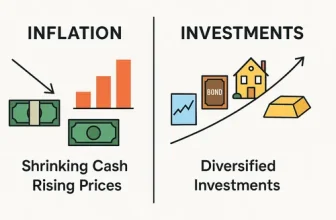
In investing, diversification is a tool to manage risk. It’s the opposite of putting your savings into one stock or one type of asset. If you spread your investments across multiple asset classes—like equities, bonds, real estate, and international markets—you reduce the chance of a total loss if one asset class takes a hit.
Different assets often move in different directions. Stocks may rise while bonds stay flat or fall. Real estate may climb even if the stock market slips. By having a mix, your overall performance smooths out over time.
A well-diversified portfolio also includes a variety within each asset class. So it’s not just owning stocks—it’s owning different types of stocks (large-cap, small-cap, growth, value), and from different industries and regions. The idea is to avoid putting too much in any single area.
The bottom line: diversification gives you more chances for parts of your plan to succeed, even if others lag. It doesn’t make you bulletproof. It just means you’re not betting everything on one outcome. That difference alone can be enough to keep you afloat—or ahead—over time.
Current Relevance
Why It Still Matters Right Now
Markets shift fast. Technology, regulation, and consumer habits change all the time. Diversification helps businesses and investors stay flexible in this kind of environment.
Companies today use diversification to stay ahead. Tech giants get into entertainment. Retail brands launch subscription services. Even small businesses look for new channels to sell their products or reach customers online. It’s not just a growth tactic—it’s a survival one.
In investing, diversification is just as relevant. A recent study by Vanguard showed that diversified portfolios tend to outperform those that aren’t spread out, especially over long periods. Trends show more people turning to index funds and ETFs to diversify more easily, with fewer costs.
If you’re investing or running a business today, you need to think about how concentrated your risk is. A sudden drop in one area shouldn’t wipe you out. That’s why having a mix of strategies is so useful.
Practical Applications and Strategies
What It Looks Like in Real Life
Let’s look at some practical ways people use diversification.
Example 1: Apple
Apple started with computers. Now it sells phones, tablets, streaming services, headphones, and cloud storage. That’s horizontal diversification. But it also bought microchip makers and invested in logistics—vertical moves to control supply.
Example 2: A Local Restaurant
During lockdowns, many restaurants started offering online cooking classes, meal kits, and branded sauces. These are new revenue streams that made them less reliant on foot traffic.
Example 3: An Investor’s Portfolio
Instead of putting all money in tech stocks, a balanced investor might spread their funds across domestic and international stocks, real estate, and government bonds. This way, if one sector stumbles, others might hold steady or grow.
Tips for Applying Diversification
- Start with your strengths. What are you already doing well?
- Think about adjacent markets or products.
- Don’t expand just for the sake of it. Test small before going big.
- In investing, use tools like ETFs or mutual funds to get broad exposure.
- Don’t ignore risk. More products or investments mean more to manage.
The best diversification strategies aren’t about chasing every opportunity. They’re about smart bets that balance risk and return.
Common Mistakes and Pitfalls
Where People Go Wrong
Diversification can backfire if done without thought.
Mistake 1: Spreading Too Thin
A business that tries to do too many unrelated things can lose focus. Instead of being strong in one area, it ends up average in many.
Mistake 2: Poor Risk Assessment
Adding new investments or business lines without understanding the risks can leave you worse off.
Mistake 3: Misreading the Market
Sometimes businesses jump into a trend too late or with the wrong product. Always do research before expanding.
Mistake 4: Ignoring Core Operations
If your base business or main portfolio isn’t stable, diversification won’t help. You need a solid foundation first.
How to Stay Clear:
- Keep your goals clear.
- Do thorough market and risk analysis.
- Build systems to manage new areas.
- Focus on quality, not quantity.
Diversification isn’t a quick fix. It’s a strategy that works best with clear thinking and long-term goals.
Conclusion
Why This Should Stay on Your Radar
Diversification is more than a buzzword. It’s a strategy that can help protect what you build and open up new ways to grow. Whether you’re investing, leading a company, or freelancing, the same basic principle applies: don’t rely on just one thing.
The smartest players in business and investing are always thinking about how to balance risk with opportunity. They aren’t chasing every trend, but they’re not standing still either. They build resilience by spreading their efforts with purpose.
Start small. Ask yourself where you’re most exposed to risk and where your strengths can stretch further. You don’t need a big budget to begin—just clear thinking and a plan.
Think of diversification not as a one-time move, but as a habit. A way to grow without gambling everything on a single outcome. That’s a strategy worth sticking to.