Introduction
Tax Brackets
Taxes are a critical part of modern life, but the process of calculating them can often feel overwhelming. At the heart of this complexity is the concept of tax brackets—a tiered system that determines how much you owe the government based on your income. While tax brackets may sound like an advanced financial concept, understanding them is crucial for anyone looking to make informed financial decisions, minimize tax liabilities, or simply gain a clearer picture of how taxes work.
So why should you care about tax brackets? Your income, deductions, and tax credits all interact with this system, meaning it directly influences how much of your paycheck you get to keep and how much goes to Uncle Sam. By the end of this article, you’ll understand not only how tax brackets work but also how you can use this knowledge to optimize your tax strategy and avoid costly mistakes.
Background
The History and Basics of Taxation
Before diving into the mechanics of tax brackets, it helps to understand where they come from and why they exist. The concept of a progressive tax system—where higher earners pay a higher percentage of their income in taxes—dates back to the 19th century. The United States introduced the income tax with the Revenue Act of 1861 during the Civil War, but the modern progressive tax system we know today began in 1913 with the ratification of the 16th Amendment.
Key Terms and Concepts
- Progressive Tax System: A system where tax rates increase as income increases, meaning people with higher incomes pay a larger percentage in taxes.
- Marginal Tax Rate: The rate at which your last dollar of income is taxed. This rate increases as you move into higher tax brackets.
- Effective Tax Rate: The actual percentage of your income that you pay in taxes, taking into account all tax brackets.
- Taxable Income: The portion of your income that is subject to taxes after deductions and exemptions are applied.
Understanding these terms is essential to grasp how tax brackets function. The progressive system is designed to be fair, ensuring that those who earn more contribute a larger share, but it also comes with complexities that can confuse taxpayers.
Detailed Overview
How Tax Brackets Really Work
Tax brackets are a fundamental part of how the U.S. tax system operates, but many people misunderstand their mechanics. Unlike a flat tax system, where everyone pays the same rate, a progressive tax system means different portions of your income are taxed at different rates. This ensures fairness by requiring higher earners to pay more, but it can create confusion if you don’t know how the system works.
Here’s a detailed look at how tax brackets apply to your income:
1. Income Division Across Brackets
The most crucial thing to understand is that your total income isn’t taxed at one flat rate. Instead, it’s divided across several tax brackets, with each portion taxed at a progressively higher rate. Here’s an example for a single filer in 2023:
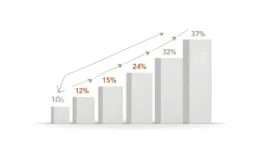
- 10% on the first $11,000 of taxable income.
- 12% on income between $11,001 and $44,725.
- 22% on income between $44,726 and $95,375.
- 24%, 32%, 35%, and 37% for higher ranges.
So, if you earn $50,000, the first $11,000 of your income will be taxed at 10%, the next chunk at 12%, and only the amount over $44,725 will be taxed at 22%. This is why it’s called a marginal tax system—only the highest portion of your income is taxed at the highest rate that applies to you.
2. Marginal vs. Effective Tax Rate
- Marginal Tax Rate: This is the rate that applies to your last dollar of income. In the case of someone earning $50,000, that would be 22%.
- Effective Tax Rate: This is the average tax rate you pay on your total income. Because your income is taxed in layers, the effective tax rate will always be lower than your marginal rate. For instance, in the $50,000 example, while the marginal rate is 22%, the effective tax rate could be around 15% once the lower brackets are considered.
Understanding these two rates helps clarify how much of your income is actually taxed, and it prevents the common misconception that you lose a large portion of your income as you enter a higher bracket.
3. Impact of Deductions and Credits
Your taxable income is not the same as your gross income. Deductions and tax credits can reduce the amount of income that is subject to tax, making tax brackets even more flexible.
- Deductions: These reduce your taxable income. For example, contributing to a retirement plan like a 401(k) can lower your taxable income, potentially keeping you in a lower tax bracket.
- Credits: Tax credits are even more beneficial because they directly reduce your tax liability, not just your taxable income. For example, if you owe $5,000 in taxes and have a $1,000 tax credit, your tax bill would drop to $4,000.
4. Filing Status and Its Impact
Your tax bracket isn’t just determined by your income. Your filing status—whether you’re single, married filing jointly, married filing separately, or head of household—affects the income thresholds for each bracket. For example, married couples filing jointly enjoy higher income limits for each bracket, which means they can earn more before moving into a higher tax rate.
- Single filers move into the 24% bracket at $95,376.
- Married couples filing jointly move into the 24% bracket at $190,751.
This is one reason why couples who get married often experience a shift in their tax obligations, sometimes leading to what’s known as the “marriage penalty” or “marriage bonus,” depending on their combined income.
5. How the Progressive System Encourages Fairness
The beauty of a progressive tax system lies in its fairness. It ensures that those with lower incomes aren’t burdened by the same tax rates as high earners. This system also allows for a more balanced distribution of tax responsibility. If you earn $1 million, for example, only the portion of your income over $578,125 is taxed at the highest rate (37% in 2023), while the rest is taxed at lower rates.
Tax brackets offer the flexibility to only apply the highest rates to those with substantial income while still taxing smaller portions of income at more reasonable rates for middle and lower earners. This structure encourages equity and provides relief to those who earn less.
6. State and Local Tax Brackets
In addition to federal tax brackets, many states have their own tax systems. Some states, like California, also use a progressive system, while others, like Texas and Florida, have no state income tax. When planning your finances, it’s important to factor in both federal and state tax brackets, as they can significantly impact your overall tax burden.
7. Special Considerations for Capital Gains
While most of this article focuses on ordinary income tax brackets, it’s worth mentioning that capital gains—profits from selling assets like stocks—are often taxed differently. Long-term capital gains (investments held for more than a year) have their own, usually lower, tax brackets (0%, 15%, and 20%), depending on your income. This is another layer of complexity that can offer tax savings for strategic investors.
By understanding these intricate details about tax brackets, you can make smarter financial choices, avoid surprises during tax season, and potentially reduce the amount you owe through strategic planning.
Current Relevance
The Impact of Tax Brackets Today
Tax brackets aren’t just a historical concept; they remain one of the most influential aspects of personal finance today. Whether you’re an employee, self-employed, or a business owner, tax brackets play a direct role in how much you owe to the government each year. As the economy and tax laws evolve, it’s essential to understand the current state of tax brackets and how they impact your financial decisions today.
1. The Current State of Tax Brackets in 2024
The U.S. tax system is designed to adjust over time to account for inflation and other economic factors. As of 2024, the federal income tax brackets range from 10% to 37% for individual taxpayers. These brackets are updated annually by the IRS to prevent “bracket creep,” a situation where inflation pushes taxpayers into higher brackets, increasing their tax liability even though their purchasing power hasn’t increased.
For example, for the 2024 tax year, the federal tax brackets are as follows for single filers:
- 10% on income up to $11,000
- 12% on income between $11,001 and $44,725
- 22% on income between $44,726 and $95,375
- 24% on income between $95,376 and $182,100
- 32% on income between $182,101 and $231,250
- 35% on income between $231,251 and $578,125
- 37% on income above $578,126
These thresholds are higher than they were in previous years due to inflation adjustments, ensuring that taxpayers don’t pay more simply because the cost of living has increased.
2. Recent Trends and Developments in Tax Brackets
A few key trends have emerged in recent years that make understanding tax brackets even more crucial:
- Inflation Adjustments: In response to the high inflation experienced in the U.S. over the last few years, tax brackets have been adjusted more significantly than usual. For instance, the inflation adjustments for 2023 and 2024 were among the largest in decades, increasing the thresholds for each tax bracket by roughly 7%. This adjustment means that individuals can earn more before moving into a higher tax bracket, providing some relief in an inflationary economy.
- The Expiration of the Tax Cuts and Jobs Act (TCJA): The Tax Cuts and Jobs Act, passed in 2017, brought significant changes to the tax brackets, lowering rates and adjusting the income ranges for each bracket. However, these changes are set to expire at the end of 2025 unless new legislation is passed. If the TCJA expires without new changes, tax rates will revert to pre-2017 levels, resulting in higher rates for most taxpayers. For example, the current 22% bracket could revert to 25%, and the 24% bracket could go back to 28%.
- Capital Gains and Investment Income: There’s also been increasing discussion about changing the tax rates for capital gains and investment income. Currently, long-term capital gains enjoy lower tax rates (0%, 15%, or 20%, depending on income), which benefit high-net-worth individuals and investors. Some policymakers have proposed increasing these rates for the wealthiest Americans, meaning that your investment income could face higher taxes in the future.
3. How Tax Brackets Affect Your Financial Decisions Today
Understanding the current tax bracket system is more than just knowing how much you owe. It can guide important financial decisions throughout the year. Here are a few ways tax brackets impact your finances in today’s environment:
- Income Management: If you know you’re on the cusp of a higher tax bracket, you might take steps to reduce your taxable income. For example, contributing more to your retirement accounts, such as a 401(k) or an IRA, can lower your taxable income and keep you in a lower bracket. This strategy not only reduces your tax bill for the current year but also helps you save for the future.
- Tax-Efficient Investments: The way your investment income is taxed can vary depending on your tax bracket. Understanding the difference between short-term and long-term capital gains is crucial. If you’re in a higher tax bracket, you may want to hold onto investments for more than a year to benefit from lower long-term capital gains rates. This can significantly reduce your tax liability on investment income.
- Tax Planning for Life Changes: Major life events—such as getting married, buying a house, or having a child—can all affect your tax bracket and, subsequently, your financial decisions. For example, marriage can change your filing status, potentially lowering your tax bill through joint filing. Meanwhile, having a child can introduce tax credits that reduce your taxable income.
- Timing Income and Deductions: Some taxpayers might be able to control when they receive income or claim deductions to optimize their tax bracket. For example, a self-employed individual or small business owner might defer income to the next year if it would push them into a higher bracket in the current year. Similarly, bunching deductions—such as charitable contributions or medical expenses—into a single year can help you take advantage of itemized deductions and potentially lower your tax bracket for that year.
- Retirement Planning: Retirement accounts, such as 401(k)s and IRAs, provide opportunities for tax deferral. When you contribute to a traditional retirement account, you reduce your taxable income today, which can keep you in a lower tax bracket. However, once you start withdrawing from these accounts in retirement, that income is taxable. Understanding how your future withdrawals will be taxed can help you make better decisions now about whether to prioritize traditional retirement accounts or Roth accounts, where withdrawals are tax-free in retirement.
4. The Role of Tax Brackets in Managing Wealth Inequality
One of the reasons tax brackets are a hot topic today is because of their role in addressing or exacerbating wealth inequality. The progressive nature of tax brackets means that higher earners pay more in taxes, but critics argue that loopholes, deductions, and preferential rates for investment income allow the wealthy to pay a lower effective tax rate than middle-class earners. Recent political debates have focused on whether tax rates for the highest brackets should be increased to address income inequality.
- Proposals for Higher Taxes on the Wealthy: There have been numerous proposals in recent years to increase taxes on the wealthy. Some lawmakers advocate for higher tax rates on incomes over a certain threshold (e.g., $10 million or $50 million). These proposals often include raising the top marginal tax rate from its current 37% to something closer to 40% or more.
- Tax Breaks and Loopholes: While the tax bracket system is designed to ensure fairness, tax deductions, credits, and loopholes can result in some high-income individuals paying a lower effective tax rate than intended. Strategies like taking advantage of capital gains tax rates or using tax-deferred accounts allow the wealthy to lower their tax burdens, sparking ongoing debates about reform.
How Tax Brackets Are More Relevant Than Ever
In the current financial landscape, tax brackets are more than just a way to calculate your tax bill. They serve as a powerful tool for financial planning, influencing decisions about income management, investments, retirement, and tax-saving strategies. Given the constant changes in tax laws, such as inflation adjustments and potential legislative changes, staying informed about tax brackets can help you make more informed decisions that impact your financial health.
By understanding where you fall within the tax bracket system and anticipating future changes, you can optimize your finances and ensure you’re making the most of the opportunities available to you today. As tax laws evolve, keeping an eye on these developments will be key to protecting your income and maximizing your financial potential.
Practical Applications and Strategies
Real-Life Examples of Tax Brackets
Understanding tax brackets conceptually is one thing, but seeing how they work in real-life situations can help solidify the knowledge and show you how to apply it to your financial decisions. In this section, we’ll explore practical examples and strategies that demonstrate how tax brackets influence income, deductions, and overall tax liability. We’ll also offer tips and best practices for making the most of your position within the tax brackets.
1. Example 1: Mid-Level Income Earner
Let’s consider Sarah, a single filer with a taxable income of $70,000 in 2024. She’s heard about tax brackets but isn’t quite sure how they apply to her situation. Many people like Sarah mistakenly believe that their entire income is taxed at the highest rate they fall into. Let’s walk through her tax calculation to dispel that myth and illustrate how marginal taxation works.
For 2024, the tax brackets for single filers are as follows:
- 10% on the first $11,000 of taxable income
- 12% on income between $11,001 and $44,725
- 22% on income between $44,726 and $95,375
Since Sarah earns $70,000, her income falls into the 22% tax bracket. However, this doesn’t mean all $70,000 is taxed at 22%. Instead, it’s divided into portions, each taxed according to the respective bracket:
- The first $11,000 is taxed at 10%, so Sarah owes $1,100 on this portion.
- The income from $11,001 to $44,725 is taxed at 12%, which comes to $4,047.
- The remaining income, from $44,726 to $70,000, is taxed at 22%. This portion ($25,274) results in a tax of $5,560.
When we add these amounts together, Sarah’s total federal tax liability is $10,707. This shows how marginal tax rates prevent all of her income from being taxed at the highest rate of 22%, reducing her overall tax burden.
Effective Tax Rate: While her marginal tax rate (the rate on her last dollar earned) is 22%, her effective tax rate is much lower. To find her effective rate, we divide her total tax liability by her taxable income:Effective Tax Rate=10,70770,000≈15.3%\text{Effective Tax Rate} = \frac{10,707}{70,000} \approx 15.3\%Effective Tax Rate=70,00010,707≈15.3%
Thus, Sarah’s effective tax rate is about 15.3%, much lower than her marginal rate of 22%.
2. Example 2: Married Couple Filing Jointly
Now let’s examine a married couple, John and Maria, who are filing jointly. Their combined taxable income for 2024 is $160,000. The tax brackets for married couples filing jointly are:
- 10% on the first $22,000 of taxable income
- 12% on income between $22,001 and $89,450
- 22% on income between $89,451 and $190,750
John and Maria’s income of $160,000 is divided into the following brackets:
- The first $22,000 is taxed at 10%, which equals $2,200.
- The income from $22,001 to $89,450 is taxed at 12%, resulting in a tax of $8,100.
- The remaining income from $89,451 to $160,000 is taxed at 22%, leading to a tax of $15,510.
Adding these amounts gives their total tax liability of $25,810.
Effective Tax Rate: Just like Sarah’s example, John and Maria’s effective tax rate is lower than their highest marginal rate of 22%. We can calculate their effective tax rate by dividing their total tax liability by their taxable income:Effective Tax Rate=25,810160,000≈16.1%\text{Effective Tax Rate} = \frac{25,810}{160,000} \approx 16.1\%Effective Tax Rate=160,00025,810≈16.1%
Thus, John and Maria’s effective tax rate is approximately 16.1%, showcasing the benefits of marginal tax rates.
3. Example 3: Strategic Use of Retirement Contributions
Now let’s consider a situation where a taxpayer uses retirement contributions to reduce their taxable income and, consequently, their tax liability.
Mark is a single filer with a taxable income of $100,000. This places him in the 24% tax bracket, where income over $95,375 is taxed at that rate. If Mark doesn’t take any action, his tax on income over $95,375 ($4,625) will be taxed at 24%, costing him $1,110.
However, Mark contributes $5,000 to his traditional IRA, which reduces his taxable income to $95,000. This moves the last portion of his income out of the 24% bracket and back into the 22% bracket. Now, his highest tax rate is 22%, not 24%, saving him $1,110 in taxes.
By contributing to a tax-deferred account like an IRA, Mark not only lowers his taxable income for the year but also postpones paying taxes on that money until he withdraws it in retirement, when he might be in a lower tax bracket.
4. Example 4: Tax Brackets and Capital Gains
Long-term capital gains—profits from selling assets held for more than one year—are subject to their own tax brackets, which are typically lower than ordinary income tax rates. Let’s look at how tax brackets apply to capital gains.
Samantha has $50,000 in long-term capital gains from selling stocks. Her total income, including these gains, is $120,000. Long-term capital gains are taxed at 0%, 15%, or 20%, depending on overall income.
- For single filers in 2024, the 0% capital gains rate applies to income up to $44,725.
- The 15% rate applies to income between $44,726 and $492,300.
- The 20% rate applies to income over $492,301.
Samantha’s total income places her in the 15% long-term capital gains tax bracket. Therefore, she owes 15% of $50,000, which comes to $7,500 in taxes on her investment earnings.
Had Samantha sold the stocks before holding them for a full year, the gains would be considered short-term capital gains and taxed at her ordinary income tax rates. In that case, her capital gains would have been taxed at her marginal rate of 22%, costing her $11,000 in taxes. By waiting to sell and qualifying for the long-term capital gains tax rate, Samantha saved $3,500 in taxes.
5. Best Practices and Tips
Here are some best practices to help you make the most of your tax bracket position:
- Contribute to Tax-Advantaged Accounts: As seen in Mark’s example, contributing to a traditional IRA or 401(k) can lower your taxable income and keep you in a lower tax bracket. Not only do these contributions reduce your taxes today, but they also allow your investments to grow tax-deferred.
- Time Your Income and Deductions: If you’re on the edge of a higher tax bracket, consider deferring income to the following year. For instance, if you’re self-employed or own a business, you might delay sending out invoices at the end of the year to avoid moving into a higher bracket. Similarly, try bunching deductions into one year if they don’t exceed the standard deduction annually, but they might in a specific year.
- Understand Capital Gains Taxation: If you’re investing, be strategic about when you sell assets. Holding investments for over a year qualifies you for lower long-term capital gains tax rates, which can save you significantly compared to short-term gains.
- Track Changes to Tax Law: Tax brackets and rates change periodically, especially in response to inflation or new tax legislation. Staying informed allows you to adjust your financial strategies as needed.
- Work With a Tax Professional: If your financial situation is complex, working with a tax professional can help you maximize your deductions, credits, and overall tax savings. Tax professionals can also assist in tax planning, ensuring that you stay within advantageous tax brackets.
Applying Tax Brackets to Your Financial Life
These examples illustrate how tax brackets impact your real-life tax obligations and financial planning. By understanding how tax brackets work, you can apply strategies to reduce your taxable income, invest wisely, and plan for life events in a way that minimizes your tax liability. Whether you’re maximizing retirement contributions, timing investment sales, or simply being aware of where you stand in the tax system, knowing how to navigate tax brackets is a key skill for achieving better financial outcomes.
Common Mistakes and Pitfalls
Common Tax Bracket Mistakes
Understanding how tax brackets work can save you from making costly mistakes, but many taxpayers still fall into common traps. Misunderstandings about how income is taxed, confusion between marginal and effective tax rates, and poor planning for future tax liabilities are just some of the issues that can lead to overpaying or under-preparing for taxes. In this section, we’ll explore the most frequent mistakes people make with tax brackets and provide practical tips on how to avoid them.
1. Mistake 1: Believing All Income Is Taxed at the Highest Rate
One of the most prevalent misconceptions is the belief that once you enter a higher tax bracket, all of your income is taxed at that bracket’s rate. This misunderstanding can cause unnecessary stress, especially when people worry that a small raise or bonus will push them into a higher bracket and significantly increase their tax burden.
Why This Happens:
This misconception arises from a misunderstanding of the marginal tax system. In reality, only the portion of your income that falls into a higher bracket is taxed at the higher rate, not your entire income.
Example:
If you are a single filer earning $50,000, your income is subject to multiple tax brackets:
- The first $11,000 is taxed at 10%.
- The next portion, from $11,001 to $44,725, is taxed at 12%.
- Only the portion of income over $44,725 (in this case, $5,275) is taxed at 22%.
Tip to Avoid This Mistake: Remember that tax brackets work incrementally. Even if your income moves into a higher bracket, only the portion of income above the threshold is taxed at that rate. Understanding this can help you avoid undue worry and make smarter financial decisions when negotiating raises or accepting bonuses.
2. Mistake 2: Confusing Marginal and Effective Tax Rates
Another common mistake is confusing the marginal tax rate (the highest tax rate that applies to your income) with the effective tax rate (the actual average percentage of your income that you pay in taxes). Many people focus only on their marginal tax rate and think that’s the percentage of their entire income that goes to taxes. This leads to overestimating the tax burden and potentially making poor financial decisions.
Why This Happens:
Marginal tax rates are often highlighted in tax forms and discussions, leading many to believe that this rate applies to their entire income. However, the effective tax rate gives a clearer picture of the total tax paid because it accounts for the lower rates applied to portions of income in lower tax brackets.
Example:
Let’s revisit Sarah, who earns $70,000 as a single filer. Her highest tax rate is 22%, but as we calculated earlier, her effective tax rate is only 15.3%. While Sarah may initially think she’s paying 22% of her income in taxes, the actual percentage she owes is significantly lower.
Tip to Avoid This Mistake: Always calculate your effective tax rate to get a true sense of how much tax you’re paying on your overall income. This will give you a more accurate picture of your financial situation and help you better plan for tax payments.
3. Mistake 3: Failing to Plan for Future Tax Bracket Changes
Tax laws are not static, and rates and brackets can change over time, affecting how much tax you owe in the future. One of the most significant potential changes on the horizon is the expiration of the Tax Cuts and Jobs Act (TCJA) in 2025. If the provisions of this act expire, tax rates could increase across the board, leading to higher taxes for most income brackets.
Why This Happens:
Many taxpayers focus on their current tax bracket without considering how changes in the law, their income, or life circumstances could shift them into a different bracket in the future. This lack of foresight can lead to higher-than-expected tax liabilities down the road.
Example:
John and Maria, a married couple, currently have a combined taxable income of $160,000, placing them in the 22% tax bracket under current laws. However, if the TCJA expires in 2025, their tax rate could rise to 25% for the same level of income. Without proper planning, this increase could result in a significantly higher tax bill.
Tip to Avoid This Mistake: Stay informed about upcoming tax law changes and plan accordingly. If future tax increases are likely, consider accelerating income or deductions into the current year, contributing to tax-deferred retirement accounts, or working with a tax advisor to strategize for future bracket shifts.
4. Mistake 4: Not Leveraging Tax-Deferred Accounts to Lower Brackets
Another common mistake is failing to take advantage of tax-deferred retirement accounts, such as traditional IRAs and 401(k)s, which can help reduce taxable income and keep you in a lower tax bracket. Many people either neglect to contribute to these accounts or don’t contribute enough to maximize their tax savings.
Why This Happens:
Some taxpayers may not fully understand how contributions to these accounts reduce taxable income. Others may be more focused on immediate spending needs and fail to prioritize long-term tax savings.
Example:
Mark, from our earlier example, has an income of $100,000, which places him in the 24% tax bracket. By contributing $5,000 to his traditional IRA, he reduces his taxable income to $95,000, dropping part of his income back into the 22% bracket and lowering his overall tax liability.
Tip to Avoid This Mistake: Make the most of tax-deferred accounts to reduce your taxable income. Not only do these contributions help you in the current year by lowering your taxes, but they also allow your investments to grow tax-free until you withdraw them in retirement. If you’re nearing the top of a tax bracket, even small contributions can push you into a lower bracket, saving you money.
5. Mistake 5: Ignoring the Impact of Filing Status on Tax Brackets
Your filing status—whether you’re single, married filing jointly, married filing separately, or head of household—has a significant impact on which tax bracket you fall into. However, many people overlook how their filing status affects their tax liability and fail to optimize for it. This is especially true for married couples who might not realize that filing jointly or separately can yield very different tax outcomes.
Why This Happens:
Filing status is sometimes treated as an afterthought, especially if there’s no immediate perceived difference between the options. However, it can lead to significant tax savings or costs, depending on your income and situation.
Example:
Jane and Alex, a married couple, earn a combined income of $250,000. If they file jointly, their income falls into the 24% bracket. However, if they file separately, Alex’s $120,000 would be taxed at 22% and Jane’s $130,000 would also be taxed at 22%, but with no benefit of combining deductions or tax credits, they could miss out on potential savings.
Tip to Avoid This Mistake: Review your filing status each year to ensure you’re using the option that offers the best tax outcome. In some cases, married couples might benefit from filing separately if one spouse has significant deductions or medical expenses, but in most cases, filing jointly offers greater tax benefits. Additionally, if you qualify for head of household status, make sure to claim it, as this filing status comes with larger deductions and lower tax rates.
6. Mistake 6: Overlooking the Impact of Deductions and Credits
Deductions and tax credits are powerful tools for reducing your taxable income and your overall tax bill, but many taxpayers overlook them or fail to maximize their use. This is particularly problematic for those who might be able to reduce their taxable income enough to drop into a lower bracket.
Why This Happens:
Taxpayers may not be aware of all the deductions and credits available to them, or they may opt to take the standard deduction without realizing that itemizing could save them more money.
Example:
Sam, a single filer, earns $90,000, which puts him in the 22% tax bracket. However, he qualifies for several deductions, including student loan interest and charitable contributions. By itemizing his deductions instead of taking the standard deduction, he reduces his taxable income to $80,000, saving him hundreds of dollars in taxes.
Tip to Avoid This Mistake: Always explore the deductions and credits available to you, particularly if you’re close to the top of a tax bracket. Even small reductions in taxable income can prevent you from moving into a higher bracket. Consider working with a tax professional if you’re unsure whether you should take the standard deduction or itemize your deductions.
How to Avoid Tax Bracket Pitfalls
Avoiding common tax bracket mistakes requires both education and planning. By understanding the difference between marginal and effective tax rates, leveraging tax-deferred accounts, and staying informed about tax law changes, you can make more informed financial decisions. Here’s a quick recap of strategies to avoid these pitfalls:
- Educate Yourself: Understand how marginal tax rates work to avoid misconceptions about how much of your income is taxed.
- Plan Ahead: Consider how future tax bracket changes or life events (like marriage or retirement) could affect your taxes.
- Maximize Deductions and Credits: Ensure you’re taking full advantage of deductions and credits to reduce your taxable income and lower your bracket.
- Leverage Tax-Deferred Accounts: Use retirement accounts strategically to reduce taxable income today and defer taxes to the future.
By applying these best practices, you can navigate the tax bracket system more effectively and avoid common pitfalls that could cost you money.
Conclusion
Mastering Tax Brackets: Final Thoughts
Understanding tax brackets is essential for anyone looking to optimize their tax strategy and make better financial decisions. Throughout this article, we’ve explored the history of tax brackets, their detailed mechanics, current trends, and practical applications.
Key Takeaways:
- Tax brackets determine how your income is taxed in a tiered system, ensuring that only a portion of your income is taxed at higher rates.
- Understanding your marginal and effective tax rates is crucial for managing your taxes effectively.
- Staying informed about policy changes and making strategic decisions, such as retirement contributions, can help you optimize your tax burden.
By mastering the concept of tax brackets, you can confidently navigate the complexities of the tax system and make informed decisions that benefit your financial well-being. For further information, consider consulting a tax advisor or utilizing online resources like the IRS website to stay updated on the latest changes.