Introduction
What Is GDP and Why Does It Matter?
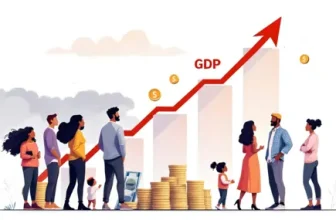
Imagine two countries: one filled with thriving businesses, high employment rates, and bustling markets, while the other struggles with slow production and limited commerce. What makes one economy more productive than another? The answer often lies in Gross Domestic Product, or GDP.
GDP is one of the most important indicators used to measure the economic performance of a country. It represents the total value of all goods and services produced within a nation’s borders over a specific period, such as a quarter or a year. Policymakers, economists, businesses, and even individuals rely on GDP data to assess economic health and make informed decisions.
Why should you care about GDP? Whether you’re a business owner, investor, worker, or student, GDP affects you in multiple ways. It influences job availability, wages, inflation, and even interest rates. If GDP is growing, it often signals economic expansion, leading to job creation and financial stability. If it is shrinking, it may indicate an economic downturn, potentially affecting employment opportunities and government policies.
This article will break down what GDP is, how it is calculated, why it matters, and how it applies to everyday life. By the end, you will have a clearer understanding of this economic measure and its role in shaping the financial landscape.
Background
The History and Key Concepts Behind GDP
The concept of GDP was introduced in the 1930s by economist Simon Kuznets. He developed it as a way to measure economic activity during the Great Depression, providing policymakers with a clearer picture of national output. Before GDP, economic performance was assessed using fragmented data on industries, agriculture, and trade, making it difficult to get a comprehensive overview of a country’s economy.
Over time, GDP became the standard for economic measurement worldwide. Organizations such as the International Monetary Fund (IMF) and the World Bank use it to compare economies and develop economic policies. Today, governments use GDP data to shape policies on taxation, spending, and investment, while businesses analyze it to plan for future growth.
Key Concepts Related to GDP
To fully understand GDP, it is essential to familiarize yourself with some key terms:
- Nominal GDP: Measures economic output using current prices, without adjusting for inflation.
- Real GDP: Adjusts for inflation, providing a more accurate measure of economic growth over time.
- Per Capita GDP: GDP divided by the total population, offering insight into the average economic output per person.
- GDP Growth Rate: The percentage change in GDP over a specific period, used to assess economic expansion or contraction.
- Recession: A period of economic decline typically defined as two consecutive quarters of negative GDP growth.
- Boom and Bust Cycles: Economic cycles characterized by periods of rapid growth (booms) followed by downturns (busts).
Understanding these terms makes it easier to interpret economic reports and assess the overall financial well-being of a country.
Detailed Overview
How Is GDP Calculated?
GDP is calculated using three primary approaches:
- The Expenditure Approach: Measures total spending on goods and services within an economy. This is the most commonly used method and follows the formula:
GDP = Consumption + Investment + Government Spending + (Exports – Imports) - The Income Approach: Adds up all earnings, including wages, business profits, and taxes, to determine economic output.
- The Production Approach: Measures the total value of goods and services produced within an economy, subtracting the cost of intermediate goods used in production.
Each method provides a different perspective on economic activity, but they all ultimately lead to the same GDP figure.
The Components of GDP
- Consumption (C): Household spending on goods and services, such as food, clothing, housing, and entertainment. This is often the largest component of GDP.
- Investment (I): Business spending on capital goods like machinery, equipment, and infrastructure, which helps drive future economic growth.
- Government Spending (G): Expenditures on public services, defense, healthcare, and infrastructure.
- Net Exports (X – M): The value of exports minus the value of imports. A trade surplus contributes positively to GDP, while a trade deficit lowers it.
When GDP grows, businesses are likely to invest more, leading to job creation and increased consumer confidence. When GDP contracts, companies may cut back on production, resulting in layoffs and reduced spending.
Current Relevance
Why GDP Matters to You
GDP remains a crucial indicator of economic health, influencing policies and financial decisions worldwide. Here are some key areas where GDP plays a significant role:
Global Economic Trends
Countries with high GDP growth, such as China and India, have increased their influence in global markets. Emerging economies often experience rapid GDP growth as they develop infrastructure, industries, and technological advancements.
Interest Rates and Inflation
Central banks monitor GDP when setting interest rates. When GDP grows too quickly, inflation may rise, leading central banks to increase interest rates to slow down borrowing and spending. When GDP slows, interest rates may be lowered to encourage economic activity.
Employment and Wages
A strong GDP often leads to job creation, wage increases, and improved living standards. Conversely, when GDP declines, businesses may reduce hiring, wages may stagnate, and unemployment can rise.
Pandemic Recovery
The COVID-19 pandemic caused significant contractions in GDP worldwide. Many governments implemented stimulus measures to boost economic recovery, demonstrating how GDP fluctuations impact policymaking.
Practical Applications and Strategies
How GDP Affects Everyday Life
GDP isn’t just a statistic for economists—it affects everyday decisions in ways that may not be immediately obvious. Here are some examples of how it influences real-life situations:
- Personal Finance: Economic growth typically leads to higher wages, making it a good time for job seekers. A shrinking economy may indicate financial caution is needed.
- Investing: Investors watch GDP reports closely. A strong GDP growth rate often boosts stock markets, while declining GDP may signal economic downturns.
- Business Planning: Companies use GDP data to determine expansion strategies. A growing economy may encourage hiring and investment, whereas a slowing economy may prompt cost-cutting measures.
- Government Policy: Policymakers use GDP figures to adjust taxes, interest rates, and public spending. During recessions, governments often introduce stimulus packages to boost spending.
- International Trade: Countries with strong GDP growth attract foreign investments and increase trade opportunities.
Consider a company that wants to expand. If GDP growth is strong, it signals higher consumer demand, making expansion a logical step. Conversely, if GDP is shrinking, the company might postpone growth plans to avoid financial risks.
Common Mistakes and Pitfalls
Common Myths About GDP
While GDP is widely used, misunderstandings can lead to false assumptions. Some of the most common mistakes include:
- Thinking GDP Measures Personal Wealth: GDP reflects national economic output, not individual income levels.
- Assuming High GDP Equals High Quality of Life: While GDP growth can contribute to better living standards, it doesn’t account for income inequality, environmental impact, or overall happiness.
- Overlooking Informal and Black Market Economies: Many transactions occur outside formal GDP calculations, including freelance work and unreported income.
- Confusing Nominal and Real GDP: Failing to adjust for inflation can make an economy appear to grow when, in reality, rising prices are distorting the numbers.
- Believing GDP Alone Defines Economic Success: While an important measure, GDP should be analyzed alongside other indicators like employment rates, inflation, and social factors.
By understanding these common errors, individuals can interpret GDP figures more accurately and make better financial decisions.
Conclusion
What You Should Take Away
GDP remains one of the most widely used measures of economic activity. It provides insights into growth patterns, helps shape policies, and influences financial markets. While it has limitations, it remains an essential tool for analyzing economic performance.
For anyone interested in finance, business, or public policy, keeping an eye on GDP trends can be valuable. Whether you’re planning investments, evaluating career opportunities, or considering the economic health of a country, GDP serves as a helpful reference point.
The next time you hear GDP mentioned in the news, take a moment to reflect on what it means and how it affects the choices you make. It might just offer a clearer picture of where things stand and where they might be headed.